
Modl
Revolutionizes game development with AI-driven testing and player experience enhancement.
Contact for Pricing
-
Quick Info
Launch Date4 Aug '25
PricingContact for Pricing
Modl – AI-driven testing and player experience enhancement for game development
Modl is an AI engine designed to transform game development by automating quality assurance and simulating real player behavior. It addresses critical challenges in the development lifecycle, from bug detection to ensuring engaging player interactions. This tool is particularly relevant for developers working within the gaming sector, offering a modern approach to testing and balancing.
By leveraging autonomous agents, Modl streamlines workflows that traditionally require extensive manual effort, making it a notable entry in the broader category of AI assistants and automation tools.
What is Modl?
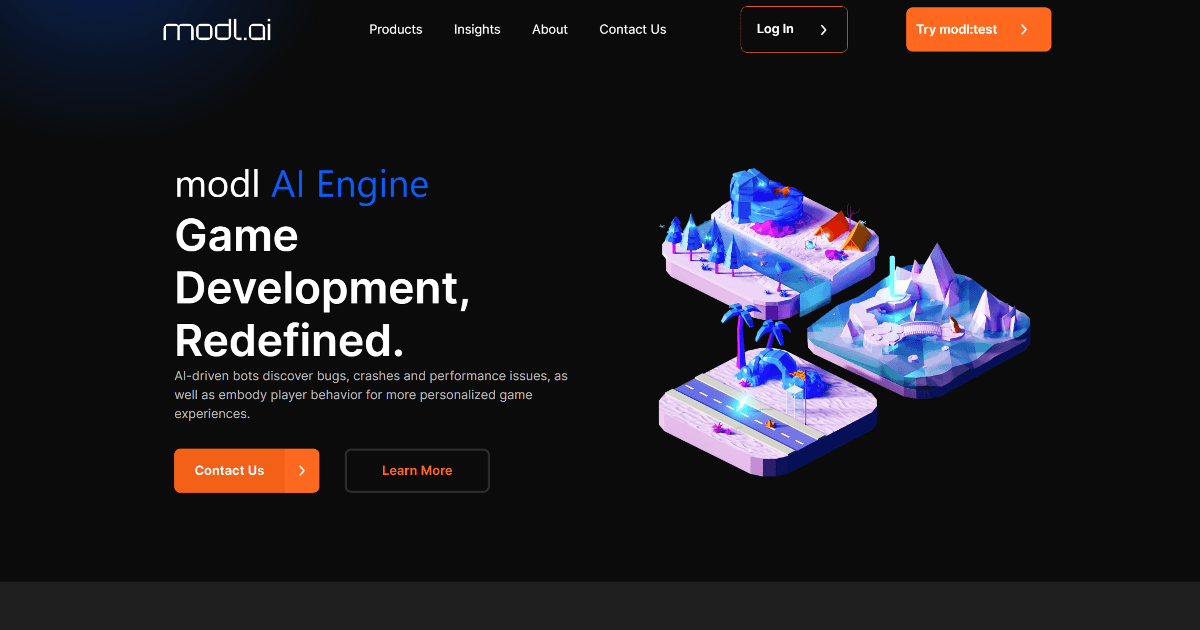
Modl is an AI-powered platform built specifically for game developers. Its core function is to deploy virtual players, or bots, that autonomously test games for bugs, crashes, and performance issues. Beyond basic QA, these bots are designed to mimic real human player behavior, providing developers with data-driven insights into game balance, difficulty curves, and overall player experience.
The system aims to reduce the time and cost associated with manual testing while improving game quality. It serves as a bridge between technical quality assurance and user-centric design, helping teams launch more polished and engaging games.
Key Features
Automated QA Bots: Virtual players that navigate game levels to detect bugs, crashes, and performance issues autonomously.
Player Behavior Simulation: Bots that emulate real player actions across different skill levels for game balancing and onboarding testing.
Self-Updating AI: A continuous data pipeline that trains bots on new player data, allowing them to learn and adapt over time.
AI-Driven Game Balancing: Provides data and simulations to help designers fine-tune game difficulty and fairness.
Scalable Testing: The AI engine can scale to support games of various genres and sizes throughout development.
Use Cases
Game Developers: Running continuous, automated QA tests throughout development to catch issues early.
QA Teams: Augmenting manual testing efforts by automating repetitive test scenarios and coverage.
Game Designers: Testing game balance, difficulty spikes, and new player onboarding experiences with simulated players.
Production Teams: Ensuring a stable, bug-minimal build is ready for launch, reducing post-launch support burdens.
Educational Institutions: Teaching students about modern game development, AI testing methodologies, and player analytics.
Competitive Analysis: Studying and predicting player behavior patterns in live games for esports or live service titles.
Underlying AI Models or Technology
Modl's technology is built around AI agents trained through reinforcement learning and behavioral cloning. These agents learn to interact with game environments by being trained on vast datasets of human player behavior. The platform's core involves advanced game AI that can perceive game states, make decisions, and execute actions.
The system utilizes techniques related to non-human imitation and decision-making to create believable virtual players. This allows it to perform complex open-ended play tasks within game worlds, a significant challenge in AI.
Pricing
Modl operates on a "Contact for Pricing" model. Prospective users need to reach out to the Modl sales team directly to discuss pricing plans, which are likely tailored to the scale of the game project, required testing volume, and level of support needed.
Pros and Cons
Pros
Significantly enhances testing efficiency by automating bug and crash detection.
Provides valuable data-driven insights into player experience and game balance.
Reduces development costs associated with large manual QA teams.
The self-updating AI bots continuously improve based on new player data.
Cons
Initial setup and integration may present a learning curve for teams new to AI tooling.
Effectiveness is dependent on the quality and volume of player data available for training the bots.
Risk of over-reliance on automated testing, potentially missing nuanced issues best caught by human testers.
Alternatives
For teams seeking different approaches to game testing and development automation, several alternatives exist. These range from general-purpose test automation frameworks to other AI-driven solutions in the education and learning space that might apply similar agent-based concepts.
General Game Testing Tools: Traditional QA and test management platforms that focus on manual test case organization and bug tracking.
Unity Test Framework / Unreal Engine Automation: Built-in testing tools within major game engines for unit and integration testing.
Playtest Cloud / Global App Testing: Services that provide access to real human testers for usability and functional feedback.
AI-Powered Analytics Platforms: Tools that analyze player data post-launch for balancing and retention, rather than pre-release testing.
Frequently Asked Questions
Embed This Tool
Add this badge to your website to show that Modl is featured on AIPortalX.

Featured on AIPortalXModl
to leave a comment