
Asana
Streamline teamwork, manage projects, automate tasks efficiently.
Free Trial
-
Quick Info
Launch Date10 Dec '25
PricingFree Trial
Categories
Asana – Orchestrate work and automate tasks for enhanced team productivity.
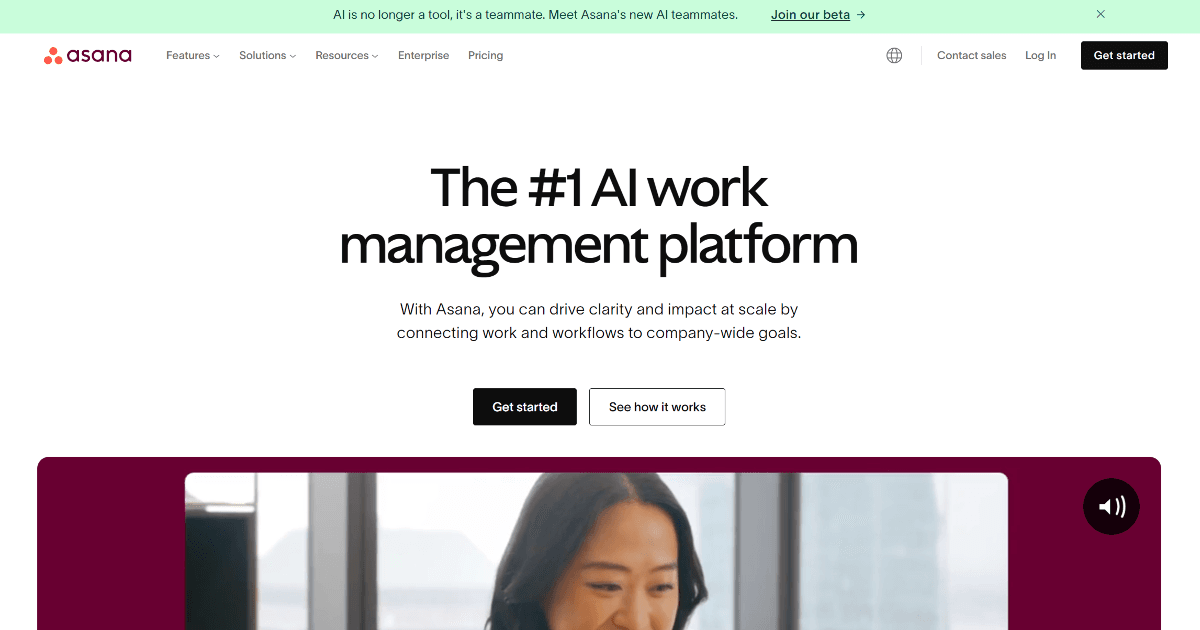
Asana is a comprehensive work management platform designed to help teams align on goals, manage projects, and automate routine processes. It serves as a central hub for coordinating work across departments, from daily task tracking to long-term strategic initiatives. Its intuitive interface and robust feature set make it a popular choice for organizations seeking to improve operational efficiency and collaboration.
As a leader in the project management category, Asana helps teams of all sizes move work from idea to completion. The platform's integration of AI capabilities further distinguishes it by providing intelligent automation and insights, reducing manual overhead and helping teams focus on high-impact work.
What is Asana?
Asana is a work management platform that enables teams to plan, organize, and track the progress of their work. It provides a structured environment where tasks can be assigned, deadlines set, and dependencies mapped, offering clarity on who is doing what and by when. The platform is built to scale from simple to-do lists to complex, multi-phase projects involving cross-functional teams.
Its core value lies in creating a single source of truth for team objectives, reducing the need for status meetings and fragmented communication. As part of the broader ecosystem of productivity and work tools, Asana focuses on streamlining collaboration and ensuring strategic alignment across an organization.
Key Features
Asana offers a wide array of features designed to support detailed project planning and execution.
Project Management: Create projects, set deadlines, assign tasks, and track progress in real-time with multiple views like lists, boards, timelines, and calendars.
Asana AI: Leverages artificial intelligence to automate routine tasks, generate smart summaries, and provide predictive insights to keep projects on track.
Workflows and Automation: Use Rules and Forms to automate repetitive processes, such as assigning tasks or updating statuses, based on custom triggers.
Extensive Integrations: Connects with over 300 enterprise tools including Google Workspace, Microsoft Teams, Slack, and Salesforce for seamless workflow continuity.
Reporting and Dashboards: Access detailed reports and customizable dashboards to visualize project health, resource allocation, and overall progress.
Use Cases
Asana is versatile and supports a variety of professional scenarios across different industries.
Marketing Teams: Managing campaign timelines, content calendars, creative asset production, and cross-channel collaboration.
Product Managers: Building and tracking product roadmaps, coordinating launch plans, and managing feedback from engineering and design teams.
IT Departments: Handling IT service requests, managing software deployment schedules, and automating routine system maintenance tasks.
Operations Managers: Streamlining business processes, overseeing supply chain logistics, and maintaining quality control checklists.
Nonprofits and Education: Managing volunteer schedules and fundraising events, or coordinating administrative tasks and project-based learning activities in academic settings.
Underlying AI Models or Technology
Asana AI incorporates machine learning models, particularly in the language domain, to understand and process natural language inputs within tasks and projects. This allows the system to interpret user requests, generate task summaries, and provide contextual recommendations.
The platform's predictive capabilities likely utilize pattern recognition on historical project data to forecast timelines and identify potential bottlenecks. Features like smart status updates leverage text summarization techniques to condense lengthy project discussions into actionable insights, helping managers make faster decisions.
Pricing
Asana operates on a freemium model with several tiered plans to accommodate different team sizes and needs.
A free Basic plan is available for individuals or small teams just getting started with task management. The Premium plan, which unlocks advanced features like timelines, custom fields, and advanced search, starts at $10.99 per user per month when billed annually. For larger organizations requiring portfolio management, workload tracking, and more advanced controls, Business and Enterprise tiers are available. For the most accurate and current pricing details, please refer to the official Asana website.
Pros and Cons
Pros
User-Friendly Interface: Intuitive design that reduces the learning curve for new team members.
Powerful Automation: Robust rules and workflow builders significantly reduce manual, repetitive work.
Excellent Integrations: Seamless connectivity with a vast ecosystem of popular business and productivity tools.
Scalability: Adapts well from small team projects to enterprise-wide portfolio management.
Cons
Learning Curve for Advanced Features: Mastering all capabilities, especially at the Business tier and above, can take time.
Cost for Premium Features: The free version is limited, and valuable features like timelines and advanced reporting require a paid subscription.
Can Be Overwhelming for Simple Needs: The extensive functionality may feel excessive for individuals or teams managing very straightforward, linear tasks.
Alternatives
Teams evaluating work management platforms have several other strong options to consider, particularly within the broader category of business and operations tools.
Monday.com: Offers highly customizable workflows and automation with a strong visual interface, suitable for a wide range of use cases from project management to CRM.
ClickUp: A feature-rich all-in-one platform that combines project management, docs, goals, and chat, often appealing to teams wanting to consolidate multiple tools.
Trello: A simpler, card-based tool ideal for visual task management and lightweight project tracking using the Kanban methodology.
Jira: Geared heavily towards software development teams, offering robust agile project management, bug tracking, and sprint planning features.
Frequently Asked Questions
Embed This Tool
Add this badge to your website to show that Asana is featured on AIPortalX.

Featured on AIPortalXAsana
to leave a comment