
AI Detector
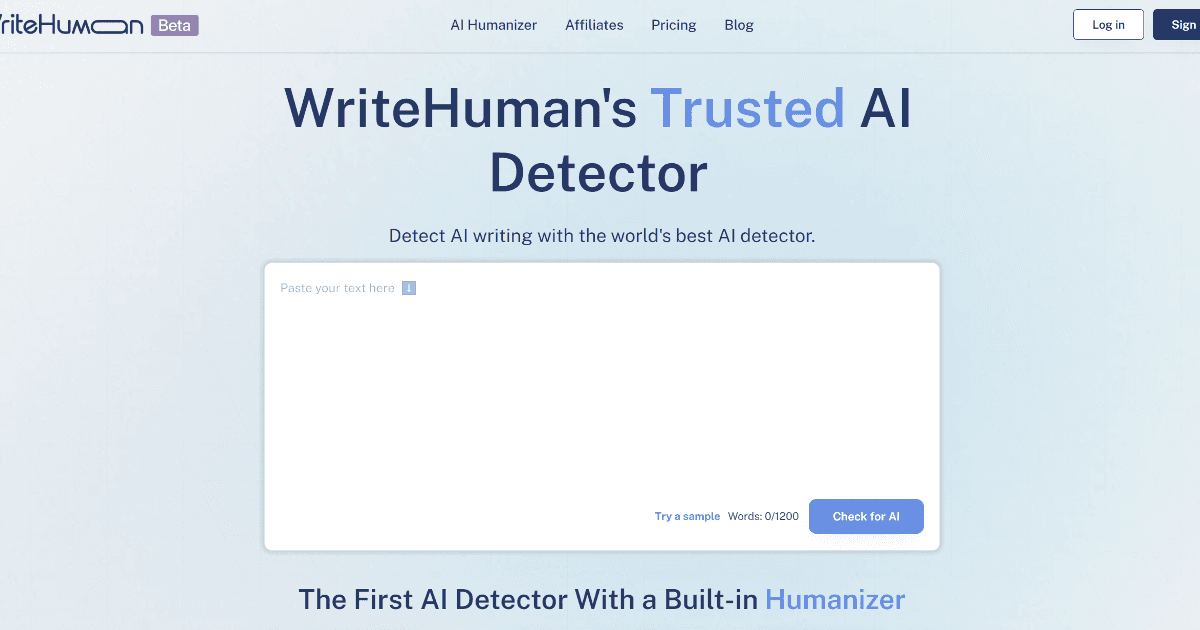
Detects AI-generated content instantly, ensuring text authenticity.
Paid
-
Quick Info
Launch Date7 Dec '25
PricingPaid
Categories
AI Detector – Instantly verify text authenticity and detect AI-generated content.
In an era where AI-generated text is increasingly common, verifying content authenticity has become essential for maintaining trust and integrity. The AI Detector tool provides a reliable solution for identifying machine-written text, serving professionals across education, marketing, and content creation. This tool is part of a broader ecosystem of AI detection and content verification solutions designed to uphold digital credibility.
By offering instant analysis, it helps users ensure their materials are original and human-crafted, addressing growing concerns about plagiarism and automated content generation. Its application supports various business and marketing workflows where authenticity directly impacts audience trust and regulatory compliance.
What is AI Detector?
AI Detector is a specialized tool that analyzes text to determine whether it was generated by artificial intelligence or written by a human. It employs sophisticated algorithms to examine writing patterns, stylistic elements, and structural features that are characteristic of AI language models. The tool is designed for users who need to verify the originality of content, from academic papers to marketing copy.
The primary function is to provide a confidence score or binary assessment regarding the likelihood of AI involvement. This helps educators check student submissions, editors vet articles, and businesses ensure their communications maintain a human touch. It integrates into education and research platforms as a safeguard against undisclosed automated content generation.
Key Features
AI Content Detection: Uses machine learning models to identify text generated by AI systems with high precision.
Real-Time Analysis: Processes text instantly and delivers results without significant delay.
User-Friendly Dashboard: Provides an intuitive interface for submitting text and interpreting detection reports.
Detailed Reporting: Generates comprehensive insights highlighting the factors contributing to the AI detection verdict.
Batch Processing: Capable of analyzing multiple documents or large volumes of text efficiently.
Use Cases
Academic Integrity: Educational institutions verifying that student essays, theses, and assignments are original work.
Content Publishing: Editors and publishers screening articles, blog posts, and manuscripts for AI-generated text before publication.
Marketing Compliance: Ensuring advertising copy, social media posts, and customer communications are human-authored to meet brand guidelines.
Legal Document Review: Law firms and legal professionals checking the authenticity of contracts, briefs, and disclosures.
Journalism and News Verification: Reporters and news agencies authenticating sources and articles to combat misinformation.
Underlying AI Models or Technology
AI Detector tools typically leverage advanced natural language processing (NLP) and machine learning models trained on vast datasets of both human-written and AI-generated text. These models analyze linguistic features such as perplexity, burstiness, and syntactic patterns that differentiate machine output from human writing. The technology often involves classifiers built on transformer architectures similar to those used in large language models.
The detection algorithms are continuously updated to keep pace with evolving AI text generation capabilities, ensuring they remain effective against newer models. Some systems may use ensemble methods or specialized neural networks fine-tuned specifically for the binary classification task of human versus AI authorship.
Pricing
AI Detector typically operates on a paid subscription model, though some providers may offer a limited free tier for basic usage or trial purposes. Pricing often scales based on the volume of text analyzed, the number of users, or the frequency of API calls. Enterprise plans may include advanced features like batch processing, API access, and dedicated support.
For the most accurate and current pricing details, including any free allowances or promotional offers, users should refer to the official AI Detector website, as plans and features are subject to change.
Pros and Cons
Pros
High Accuracy: Delivers precise detection results, helping users reliably identify AI-generated content.
Time-Saving: Quickly analyzes large volumes of text, automating a process that would be manual and time-consuming.
Versatile Application: Useful across multiple industries including education, marketing, legal, and publishing.
Enhanced Security: Helps protect against plagiarism and content manipulation by verifying originality.
Cons
Initial Learning Curve: Some users may require time to understand all features and interpret detection reports accurately.
Limited Language Support: Detection accuracy may be highest for English text, with potentially reduced performance for other languages.
Evolving Challenge: As AI writing tools improve, detection models must constantly adapt, which may lead to occasional false positives or negatives.
Alternatives
Several other tools offer AI content detection, each with different approaches, accuracy levels, and pricing. When evaluating AI-powered writing and analysis tools, consider the following alternatives:
Originality.ai: A dedicated AI and plagiarism detector focused on content marketing and SEO writing.
GPTZero: A popular tool designed for educators to detect AI-generated text in student submissions.
Copyleaks AI Content Detector: Offers a comprehensive suite for detecting AI-generated text, code, and paraphrased content.
Turnitin AI Writing Detection: Integrated into academic integrity platforms, widely used by educational institutions.
Writer.com AI Detector: A free tool that checks content for AI generation as part of a broader writing assistant platform.
Frequently Asked Questions
Embed This Tool
Add this badge to your website to show that AI Detector is featured on AIPortalX.

Featured on AIPortalXAI Detector
to leave a comment